

Mini VRF Units – Compact, Energy-Efficient Cooling for Homes and Small Buildings
Mini VRF (Variable Refrigerant Flow) units are designed to deliver the core benefits of full-scale VRF systems in a compact, cost-effective format. They are ideal for villas, duplex homes, small commercial buildings, clinics, boutique offices, and low-rise developments that require zoning flexibility, quiet operation, and high energy efficiency—without the complexity or scale of large VRF plants.
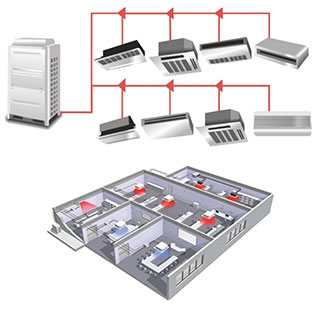
By connecting multiple indoor units to a single compact outdoor unit, mini VRF systems provide independent temperature control for each space while maintaining stable performance and lower operating costs.
Venus Air Conditioning Specialist provides professional design, installation, commissioning, service, and AMC support for mini VRF systems across residential and light-commercial projects.
What Is a Mini VRF System?
A mini VRF system is a scaled-down VRF solution engineered for smaller capacities and fewer indoor units. Like standard VRF, it uses inverter-driven compressors to modulate refrigerant flow based on real-time demand, but it is optimized for compact footprints and simplified installation.
Typical features include:
- One compact outdoor unit
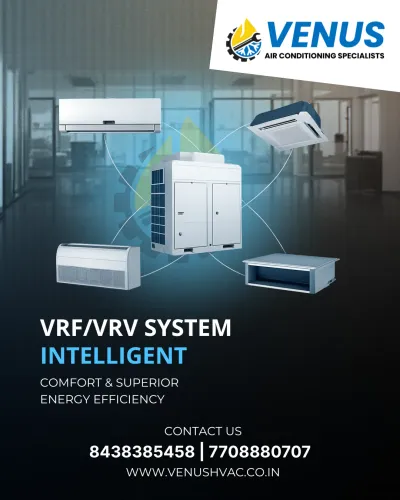
- Multiple indoor units (wall-mounted, cassette, or ducted)
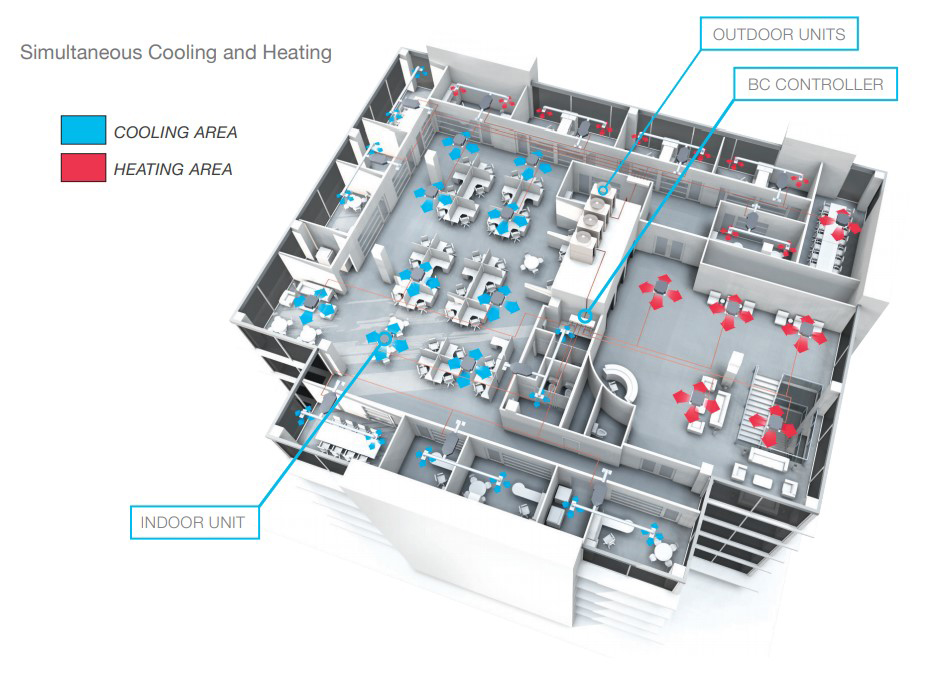
- Independent control for each room or zone
- High part-load efficiency
Mini VRF bridges the gap between multiple split ACs and full VRF systems.
Where Mini VRF Units Are Most Suitable
Mini VRF units are well suited for:
- Independent villas and duplex homes
- Premium apartments and penthouses
- Small office buildings and co-working spaces
- Clinics, laboratories, and consulting rooms
- Retail outlets and boutique hotels
They are especially effective where multiple rooms require different temperatures at the same time.
Key Benefits of Mini VRF Units
Zoning Flexibility
Each indoor unit operates independently, allowing different rooms to maintain different temperatures based on occupancy and usage.
Energy Efficiency
Inverter technology and excellent part-load performance help reduce electricity consumption compared to multiple conventional split ACs.
Quiet Operation
Low indoor noise levels make mini VRF ideal for bedrooms, offices, and consultation rooms.
Clean Aesthetics
Fewer outdoor units reduce exterior clutter and improve building aesthetics.
Scalable Design
Mini VRF systems allow future expansion within capacity limits, offering design flexibility.
Mini VRF vs Multiple Split ACs
While multiple split ACs can cool several rooms, they often lead to:
- Higher combined outdoor unit count
- Less efficient part-load operation
- Increased maintenance complexity
Mini VRF systems consolidate cooling into a single intelligent system, offering better efficiency, centralized monitoring, and long-term reliability.
Design Considerations for Mini VRF Systems
Professional HVAC design is essential for optimal performance. Key considerations include:
- Accurate heat load calculation for each room
- Correct indoor unit selection and placement
- Refrigerant piping layout and length limits
- Electrical capacity and control integration
Proper design ensures balanced cooling, stable operation, and energy savings.
Installation, Testing, and Commissioning
Mini VRF installation requires trained technicians and specialized tools. The process includes:
- Refrigerant piping and insulation
- Electrical and communication wiring
- Drainage planning
- Pressure testing and vacuuming
- System configuration and commissioning
Correct commissioning is critical to achieving the expected efficiency and comfort.
Service and AMC for Mini VRF Units
Although mini VRF systems are reliable, regular preventive maintenance is necessary to maintain performance. Professional service includes:
- Filter and coil cleaning
- Electrical inspection
- Refrigerant checks
- Control diagnostics and performance testing
Annual Maintenance Contracts (AMC) help ensure predictable costs and uninterrupted operation.
Cost Perspective and Long-Term Value
Mini VRF units generally have a higher initial cost than split ACs but offer:
- Lower long-term energy consumption
- Reduced maintenance complexity
- Improved comfort and zoning control
For homes and small commercial buildings with extended AC usage, the lifecycle value often outweighs the upfront investment.
Conclusion
Mini VRF units provide an ideal balance between performance, efficiency, and scalability for homes and small buildings. By combining the intelligence of VRF technology with a compact system design, mini VRF delivers quiet operation, flexible zoning, and long-term energy savings.
With professional HVAC design, correct installation, and regular maintenance, mini VRF systems offer a future-ready cooling solution for premium residential and light-commercial applications.
Need Expert Guidance?
For mini VRF system selection, design, installation, service, or AMC planning, consult an experienced HVAC specialist to evaluate the most suitable solution for your project.