

VRF / VRV Air Conditioning Systems – Smart Cooling for Modern Buildings
VRF (Variable Refrigerant Flow) and VRV (Variable Refrigerant Volume) air conditioning systems are advanced HVAC solutions designed for buildings that require high energy efficiency, precise temperature control, and long operating hours. Across Tamil Nadu, including fast-growing commercial markets such as Coimbatore, VRF/VRV systems are widely adopted for offices, hospitals, hotels, showrooms, and premium residential projects.
These systems intelligently adjust cooling output based on real-time demand, making them ideal for buildings with multiple zones and variable occupancy.
What Is VRF / VRV Air Conditioning?
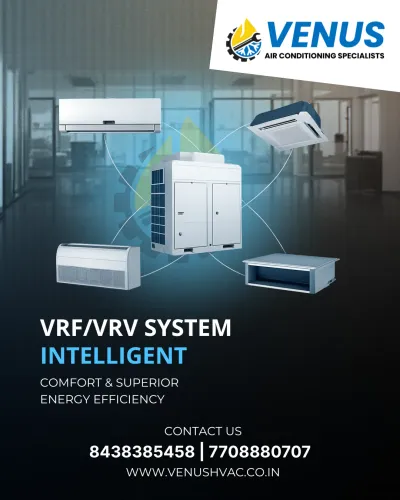
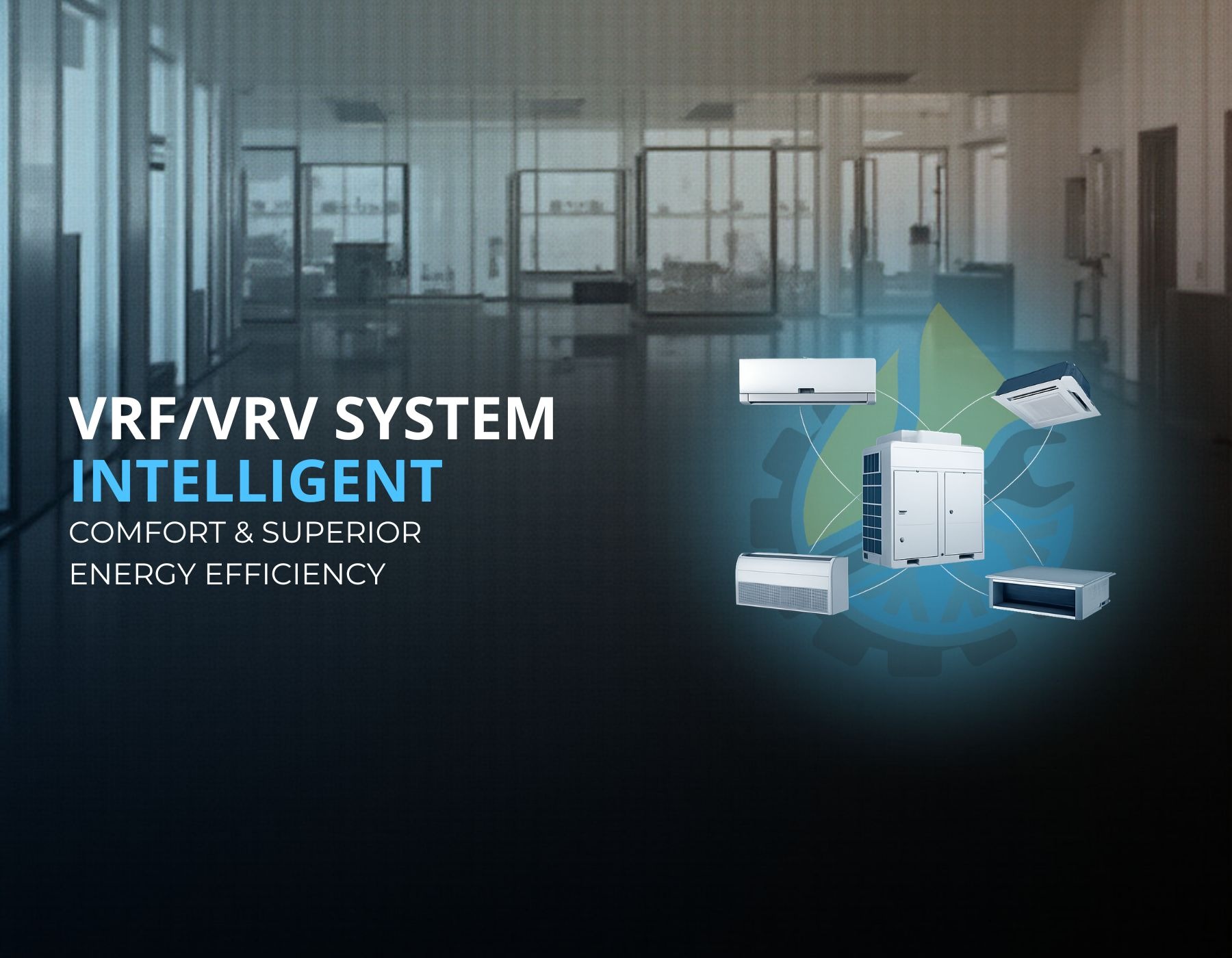
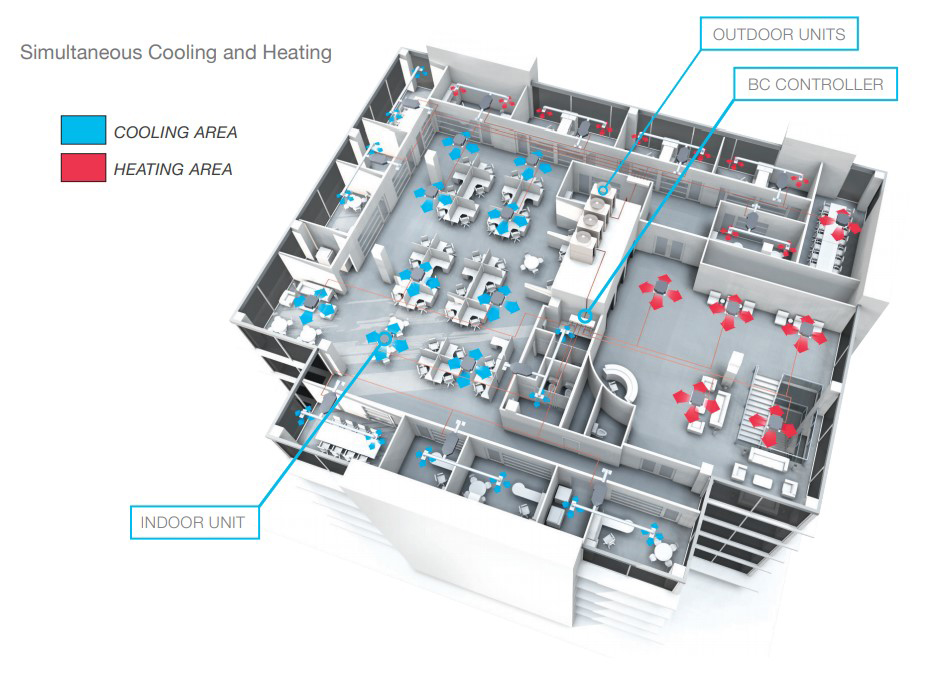
VRF and VRV systems use inverter-driven compressors that regulate the flow of refrigerant to multiple indoor units connected to one or more outdoor units. Each indoor unit can operate independently, allowing different rooms or zones to maintain different temperatures at the same time.
- VRF is the generic technology name used across HVAC.
- VRV is a branded term used by specific manufacturers.
Functionally, both systems work on the same principle and deliver similar benefits.
Key Benefits of VRF / VRV Systems
High Energy Efficiency
VRF/VRV systems perform exceptionally well at partial load. Since most buildings do not operate at full capacity all day, this results in significant electricity savings over time.
Individual Zone Control
Each room or zone can be controlled independently, improving comfort and avoiding unnecessary cooling in unused areas.
Flexible System Design
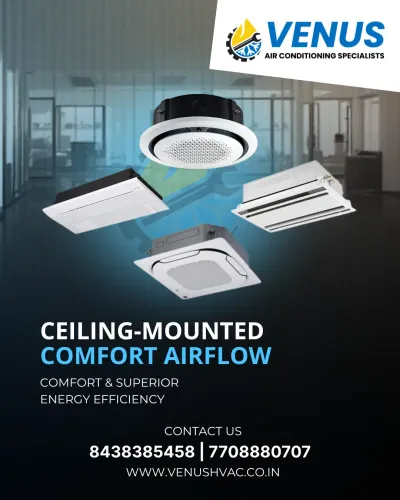
VRF systems support multiple indoor unit types, including ducted, cassette, wall-mounted, and floor-mounted units—allowing flexibility in architectural and interior design.
Quiet Operation
Low noise levels make VRF/VRV systems suitable for offices, hospitals, hotels, and premium residences.
Space Efficiency
Compact outdoor units and flexible refrigerant piping reduce space requirements compared to traditional centralised systems.
Applications of VRF / VRV Air Conditioning
VRF/VRV systems are commonly installed in:
- Corporate offices and IT parks
- Hospitals and healthcare facilities
- Hotels and hospitality projects
- Retail showrooms and malls
- Educational institutions
- Luxury homes, villas, and apartments
In mixed-use buildings, VRF systems allow different areas to operate independently while sharing a common outdoor system.
VRF / VRV vs Traditional AC Systems
Compared to split AC systems
VRF systems handle multiple rooms with a single outdoor unit, reducing clutter and improving energy efficiency.
Compared to ducted AC systems
VRF offers better zoning control and efficiency in buildings with variable occupancy.
Compared to centralised AC systems
VRF systems require less mechanical space and are more flexible for phased construction or retrofits.
Importance of Professional VRF / VRV Design
The performance of a VRF/VRV system depends heavily on accurate design and commissioning. Key design considerations include:
- Detailed heat-load calculation for each zone
- Correct indoor and outdoor unit selection
- Refrigerant piping limits and routing
- Electrical load planning and controls integration
Improper design can lead to efficiency loss, frequent alarms, and reduced system life.
VRF / VRV Installation & Commissioning
Professional installation includes:
- Indoor unit placement and mounting
- Refrigerant piping and insulation
- Electrical wiring and communication setup
- System evacuation, gas charging, and testing
- Performance verification and commissioning
Experienced execution ensures stable operation and long-term reliability.
VRF / VRV Service and Maintenance
Although VRF systems are highly efficient, they require regular preventive maintenance to protect electronic components and ensure optimal performance.
Typical VRF service includes:
- Indoor unit filter and coil cleaning
- Outdoor unit inspection
- Refrigerant pressure and leak checks
- Sensor and control diagnostics
- Performance monitoring
Most commercial users opt for Annual Maintenance Contracts (AMC) to ensure predictable costs and uninterrupted cooling.
Choosing the Right VRF / VRV HVAC Partner
VRF/VRV systems demand specialised HVAC expertise. Working with an experienced contractor such as Venus Air Conditioning Specialist ensures correct system selection, professional installation, and dependable after-sales support.
Conclusion
VRF and VRV air conditioning systems deliver energy efficiency, zoning flexibility, and reliable performance for modern buildings. For commercial and premium residential projects across Tamil Nadu, these systems offer a future-ready cooling solution that balances comfort with operating cost control.
With professional design, installation, and maintenance, VRF/VRV systems provide long-term value and consistent indoor comfort.