



VRF vs Traditional HVAC Systems – Performance, Efficiency, and Control
Selecting the right HVAC system is a strategic decision for commercial buildings across Tamil Nadu, where long operating hours, varying occupancy, and rising energy costs demand efficient and reliable cooling solutions. In commercial hubs such as Coimbatore, decision-makers often evaluate VRF (Variable Refrigerant Flow) systems against traditional HVAC systems to determine which technology offers better long-term performance and value.
While both systems are capable of delivering effective cooling, their design philosophy, control capability, and energy behavior differ significantly.
Understanding Traditional HVAC Systems
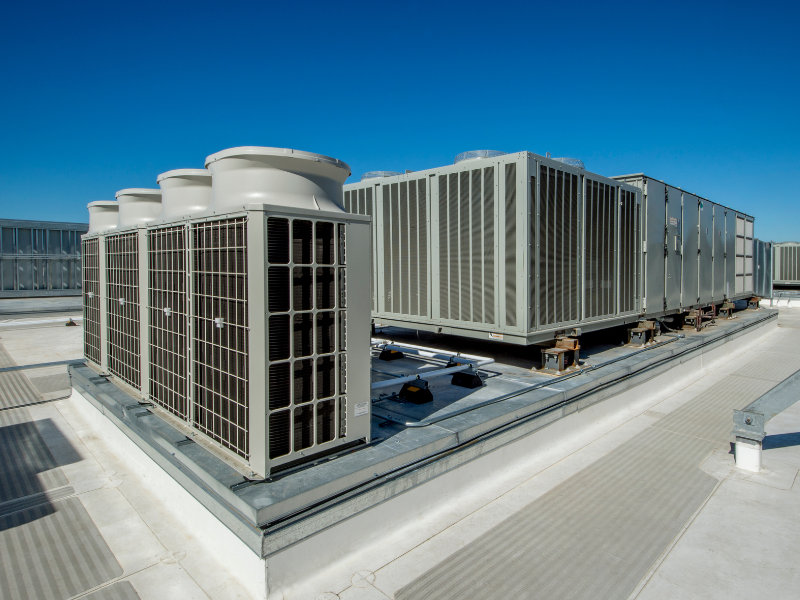
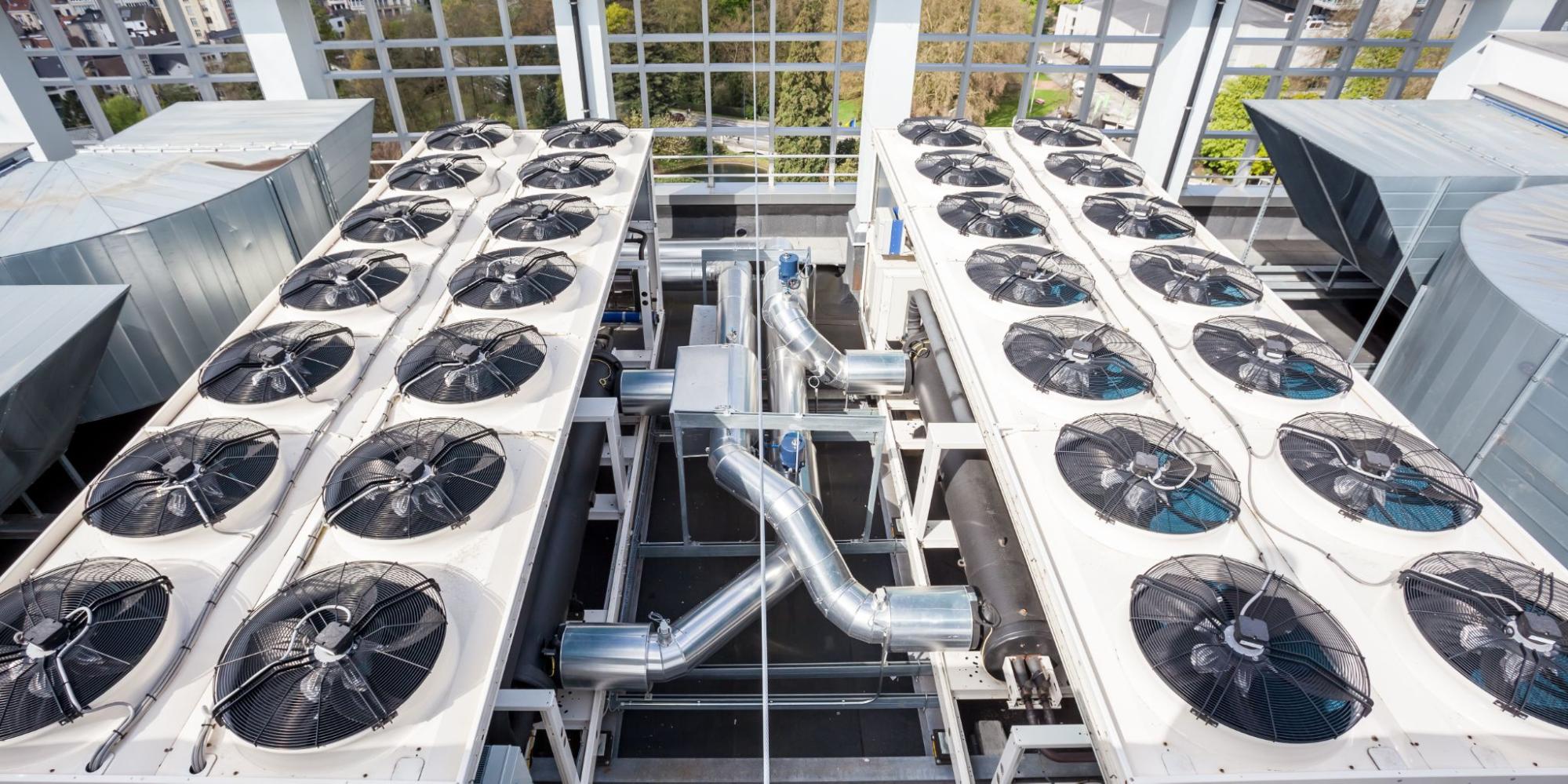
Traditional HVAC systems typically include chilled water–based centralised systems, packaged units, or ducted systems operating at fixed or limited capacity control. These systems are designed to cool large zones uniformly and are often controlled through centralized thermostats or basic zoning arrangements.
Such systems are widely used in buildings with predictable occupancy and constant cooling demand. However, when load conditions vary across different areas of the building, traditional systems may continue operating at higher capacity than required, leading to increased energy consumption.
Understanding VRF Air Conditioning Systems
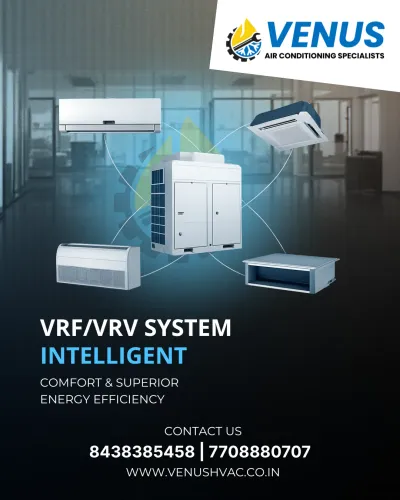
VRF systems are built around inverter-driven compressors that modulate cooling output continuously based on real-time demand. A single outdoor unit can support multiple indoor units, each operating independently.
This allows different rooms or zones to maintain different temperature settings simultaneously, without affecting overall system efficiency. VRF systems are especially effective in buildings where occupancy patterns change throughout the day.
Key Differences Between VRF and Traditional HVAC
Energy Efficiency
VRF systems are significantly more energy-efficient during partial-load operation. By adjusting compressor speed and refrigerant flow dynamically, VRF systems avoid the energy losses associated with frequent start-stop cycles common in traditional systems.
Traditional HVAC systems may operate efficiently at full load, but their performance drops when demand fluctuates.
Zoning and Temperature Control
VRF systems provide true room-level or zone-level control. Each indoor unit responds independently to user settings, improving comfort and reducing overcooling.
Traditional HVAC systems generally cool larger zones uniformly, limiting flexibility in mixed-use spaces.
Installation and System Design
Traditional HVAC systems rely on extensive ducting or chilled water piping, which can increase space requirements. VRF systems use refrigerant piping, offering greater layout flexibility, especially in retrofit projects.
Both systems require professional HVAC design, but VRF demands more precise engineering and commissioning.
Operating Cost and Lifecycle Value
Although VRF systems often involve a higher initial investment, their lower energy consumption and operational flexibility result in reduced lifecycle costs. Traditional HVAC systems may have lower upfront costs but can incur higher energy expenses over time if not optimized.
Application Suitability
VRF systems are best suited for:
- Office buildings with multiple cabins and departments
- Hotels and hospitality facilities
- Hospitals and healthcare environments
- Educational institutions
- Premium residential projects
Traditional HVAC systems are better suited for:
- Large open-plan commercial spaces
- Industrial facilities with constant load
- Buildings with centralized control requirements
Importance of Professional System Selection
Choosing between VRF and traditional HVAC systems should never be based solely on equipment cost. Accurate heat-load calculation, occupancy analysis, and operational profiling are essential to determine the most suitable system.
Professional HVAC consultants evaluate both current and future requirements to ensure the selected system delivers long-term efficiency and reliability.
Maintenance and Operational Considerations
Both VRF and traditional HVAC systems require structured preventive maintenance. However, VRF systems rely heavily on electronic controls and sensors, making professional servicing and diagnostics essential.
Planned maintenance programs and AMC support help maintain performance, prevent downtime, and extend system life for both technologies.
Regional Adoption Trends
Across Tamil Nadu, VRF systems are increasingly adopted in modern commercial developments due to their efficiency and flexibility. In addition to installations in Coimbatore, VRF technology is also gaining traction in nearby regions such as Erode, where offices and institutional buildings are transitioning toward energy-efficient HVAC solutions.
Conclusion
Both VRF and traditional HVAC systems have their place in commercial cooling applications. VRF systems excel in energy efficiency, zoning flexibility, and lifecycle cost savings, while traditional HVAC systems remain effective for constant-load and large open-area applications.
The right choice depends on building layout, usage patterns, and long-term operational goals. With professional HVAC design and execution, either system can deliver reliable and efficient cooling for commercial buildings across Tamil Nadu.