

How Clean Air Filters Improve AC Cooling Efficiency and Reduce Power Costs
Air filters play a critical role in the performance, efficiency, and longevity of any air conditioning system. Whether used in homes, offices, retail spaces, or industrial facilities, a clean air filter directly impacts cooling output, electricity consumption, and indoor air quality. Studies and field data indicate that clean air filters can improve AC cooling efficiency by nearly 30 percent, making filter maintenance one of the most cost-effective HVAC practices.
Impact of Dirty Air Filters on AC Performance
When dust, grease, and airborne particles accumulate on air filters, airflow through the system becomes restricted. This blockage prevents sufficient air from passing over the evaporator coil, reducing heat absorption and lowering cooling efficiency. As a result, the air conditioner must operate for longer cycles to achieve the desired temperature.
Restricted airflow forces the compressor to work harder, increasing electrical load and causing higher energy consumption. Over time, this continuous strain accelerates wear on the compressor, blower motor, and other mechanical components, significantly shortening system lifespan.
Energy Consumption and Electricity Bills
One of the most immediate consequences of dirty AC filters is increased electricity usage. When airflow is obstructed, the system compensates by running longer and drawing more power. In commercial buildings where air conditioning operates for extended hours, this inefficiency can lead to substantial increases in monthly electricity bills.
Regular filter cleaning helps maintain optimal airflow, allowing the system to cool spaces faster while consuming less power. For businesses, this translates into measurable operational cost savings without any major equipment upgrades.
Importance of Monthly Filter Cleaning
Cleaning air filters every 30 days is recommended for most residential and commercial applications. In high-traffic environments such as offices, hospitals, showrooms, restaurants, and factories, filters may require more frequent attention due to higher dust and pollutant levels.
Periodic cleaning removes accumulated debris, restores airflow, and prevents contaminants from circulating through indoor spaces. In addition to cleaning, filters should be replaced at manufacturer-recommended intervals to ensure consistent performance.
Indoor Air Quality and Health Benefits
Beyond cooling efficiency, clean air filters significantly improve indoor air quality. Filters trap dust, pollen, bacteria, and other airborne particles that can affect occupant health. When filters are clogged, these contaminants may bypass filtration or re-enter indoor air, leading to respiratory discomfort and reduced comfort levels.
Maintaining clean filters is especially critical in commercial spaces with high occupancy, where indoor air quality directly affects employee productivity, customer comfort, and regulatory compliance.
Filter Maintenance in Commercial HVAC Systems
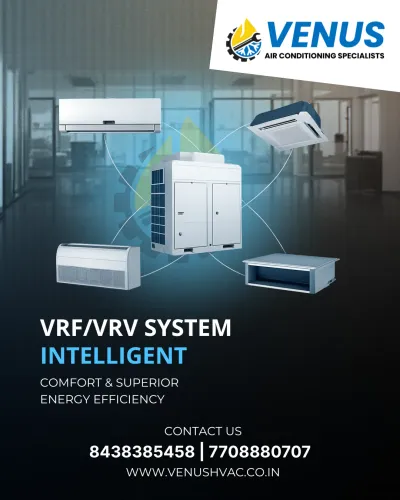
In large commercial HVAC systems such as ducted AC, VRF, and central air conditioning plants, filter maintenance is a core component of preventive maintenance planning. Neglecting filter cleaning can result in uneven cooling, frequent breakdowns, and premature equipment failure.
Professional HVAC service providers like Venus Air Conditioning Specialist include filter inspection, cleaning, and replacement as part of structured preventive maintenance and AMC programs. This proactive approach ensures stable performance and reduces emergency repair costs.
Long-Term System Health and Reliability
Clean filters protect critical components such as evaporator coils and compressors from contamination. By maintaining proper airflow and reducing mechanical stress, filter maintenance helps extend overall system life and delays the need for costly replacements.
For businesses and property owners, this translates into better asset protection, predictable maintenance costs, and uninterrupted cooling performance throughout the year.
Conclusion
Air filter maintenance is a simple yet highly effective way to improve AC cooling efficiency, reduce electricity consumption, and maintain healthy indoor environments. Cleaning filters every 30 days and replacing them periodically ensures optimal airflow, protects system components, and delivers consistent cooling performance. In both residential and commercial settings, regular air filter maintenance should be treated as a non-negotiable part of responsible HVAC ownership.