



VRF Air Conditioning Systems – How They Work and Where They Perform Best
VRF (Variable Refrigerant Flow) air conditioning systems have become one of the most preferred HVAC solutions for modern commercial and premium residential buildings across Tamil Nadu. In fast-growing urban and industrial regions such as Coimbatore, VRF systems are widely adopted for offices, hospitals, hotels, educational institutions, and mixed-use developments where cooling demand varies throughout the day.
Unlike conventional air conditioning systems that operate at fixed capacity, VRF systems dynamically adjust cooling output based on real-time load conditions. This intelligent modulation allows buildings to maintain stable indoor comfort while significantly reducing energy consumption during partial-load operation.
How VRF Air Conditioning Systems Work
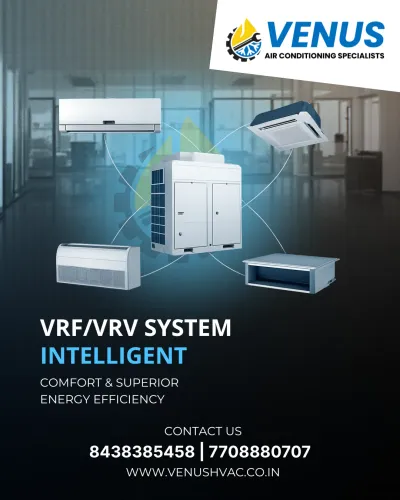
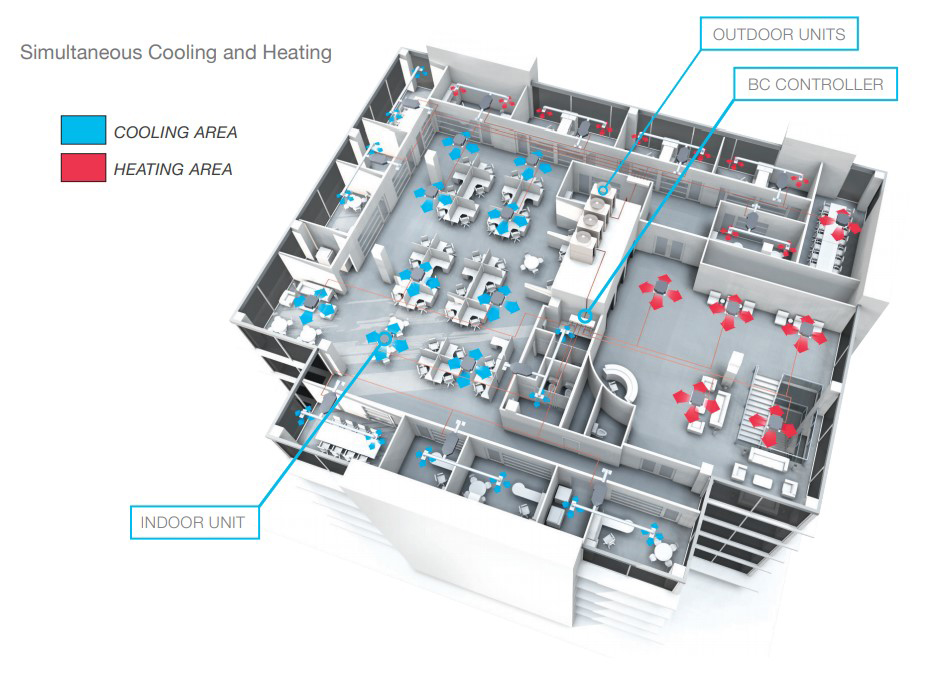
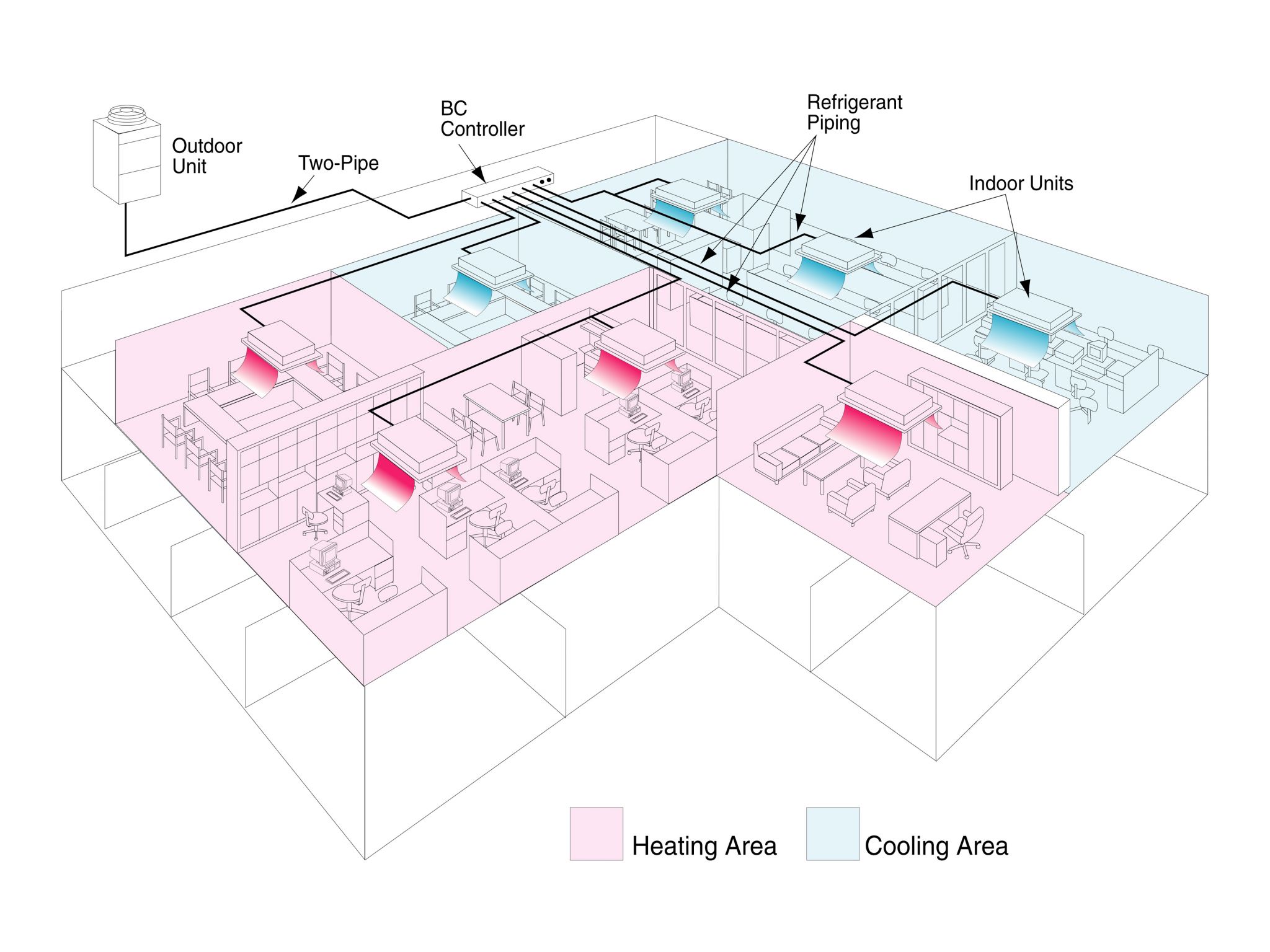
A VRF system consists of one or more inverter-driven outdoor units connected to multiple indoor units through refrigerant piping. Each indoor unit operates independently, allowing different rooms or zones to maintain different temperature settings at the same time.
The outdoor unit continuously varies compressor speed and refrigerant flow based on feedback from indoor units. When cooling demand reduces in certain areas, the system automatically lowers output, preventing unnecessary power consumption. This operating principle makes VRF systems highly efficient for buildings with variable occupancy and usage patterns.
Applications Where VRF Systems Perform Best
VRF air conditioning systems are particularly effective in buildings that require zoning flexibility and extended operating hours, including:
- Corporate offices and IT campuses
- Hospitals and healthcare facilities
- Hotels and serviced apartments
- Educational institutions and training centres
- Premium residential apartments and villas
In these environments, different zones experience different cooling loads at different times. VRF technology ensures each space receives the required cooling without overloading the system.
Key Advantages of VRF Air Conditioning
One of the primary benefits of VRF systems is energy efficiency. By operating efficiently during partial loads, VRF systems can reduce electricity consumption compared to traditional systems operating at constant capacity.
Additional advantages include:
- Independent temperature control for each room or zone
- Quiet indoor operation suitable for professional environments
- Reduced outdoor unit clutter compared to multiple split systems
- Scalable system design that supports future expansion
- Improved comfort through stable temperature control
These features make VRF systems a long-term, future-ready HVAC solution for modern buildings.
Design and Engineering Considerations
The performance of a VRF system depends heavily on professional HVAC design. Accurate heat-load calculation for each space is critical to ensure correct system sizing. Refrigerant piping layout, pipe lengths, elevation differences, and indoor unit selection must strictly follow manufacturer guidelines.
Improper design or shortcuts during installation can result in reduced efficiency, frequent alarms, and long-term reliability issues. Professional commissioning—including pressure testing, vacuuming, control configuration, and performance verification—is essential before handover.
Service, Maintenance, and System Reliability
Although VRF systems are technologically advanced, they still require structured preventive maintenance to sustain performance. Regular servicing includes filter cleaning, coil inspection, electrical checks, refrigerant monitoring, and control diagnostics.
For commercial buildings operating HVAC systems for long hours, planned maintenance programs and AMC support help prevent unexpected downtime and extend system life.
Regional Adoption and Project Experience
Across Tamil Nadu, VRF systems are increasingly implemented in both new construction and retrofit projects. In addition to installations in Coimbatore, VRF systems are also used in nearby commercial developments such as Tirupur, where offices and institutional buildings demand efficient, scalable cooling solutions.
Conclusion
VRF air conditioning systems offer an optimal balance of efficiency, flexibility, and comfort for modern buildings. When designed, installed, and maintained professionally, VRF systems deliver reliable performance, lower operating costs, and long-term value for commercial and premium residential applications across Tamil Nadu.