

Duct Air Conditioner Installation in Tamil Nadu: What Businesses Must Know
Duct air conditioner installation has become the preferred cooling solution for commercial buildings across Tamil Nadu. Offices, hospitals, showrooms, hotels, factories, and educational institutions increasingly rely on ducted air conditioning systems for uniform cooling, aesthetic interiors, and energy-efficient operation. However, successful duct AC installation requires technical planning and precise execution. Skipping any critical step can result in poor cooling performance, high electricity consumption, and long-term operational issues.
Professional HVAC contractors in Tamil Nadu follow structured installation practices to ensure reliable airflow, system efficiency, and long equipment life.
Understanding Ducted Air Conditioning Systems
A duct air conditioning system distributes cooled air through a network of ducts connected to a centralized indoor unit. Unlike split AC systems, ducted AC offers concealed installation and consistent temperature control across multiple zones. This makes it ideal for commercial spaces with large floor areas and continuous occupancy.
For businesses in Tamil Nadu’s warm and humid climate, ducted AC systems provide stable cooling while maintaining interior aesthetics and acoustic comfort.
Importance of Heat Load Calculation
Heat load calculation is the foundation of any duct AC installation. It determines the exact cooling capacity required based on:
- Area size and ceiling height
- Occupancy levels
- Equipment heat gain
- Lighting load
- Window orientation and insulation
Incorrect heat load assessment can lead to undersized or oversized systems. An undersized system struggles to cool, while an oversized system increases power consumption and shortens compressor life. Professional HVAC contractors in Tamil Nadu always perform detailed heat load calculations before system selection.
Duct Design and Fabrication Standards
Duct fabrication is one of the most critical phases of duct AC installation. Proper duct design ensures balanced airflow, minimal pressure loss, and noise-free operation. Poorly fabricated or improperly insulated ducts result in air leakage, uneven cooling, and energy loss.
Standard practices include:
- Optimized duct sizing and routing
- Proper insulation thickness
- Use of quality GI sheets or pre-insulated ducts
- Airtight joints and supports
Experienced HVAC companies follow industry standards to ensure long-term system efficiency.
System Selection for Tamil Nadu Conditions
Selecting the right duct AC system depends on building usage, operating hours, and energy efficiency requirements. Options may include ducted split systems, packaged units, or integration with VRF systems for larger projects.
In Tamil Nadu, where air conditioning runs for extended periods, energy-efficient equipment selection plays a major role in controlling operational costs. Professional installers evaluate performance ratings, airflow capacity, and maintenance requirements before finalizing the system.
Installation, Testing, and Commissioning
Installation involves precise placement of indoor and outdoor units, duct connections, electrical wiring, and drainage systems. After installation, testing and commissioning ensure the system operates as designed.
Commissioning includes:
- Airflow balancing
- Temperature validation
- Electrical load testing
- Noise and vibration checks
Skipping commissioning often leads to performance complaints and premature breakdowns.
Why Professional HVAC Contractors Matter
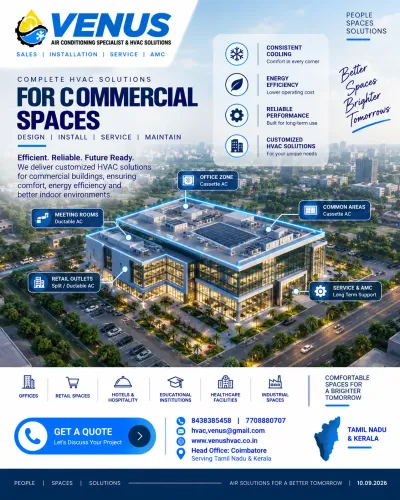
Professional HVAC contractors across Tamil Nadu follow structured installation workflows that reduce risk and improve system reliability. Companies like Venus Air Conditioning Specialist provide end-to-end duct AC solutions, including design, fabrication, installation, and maintenance.
Working with experienced contractors ensures compliance with safety standards, predictable performance, and long-term cost savings.
Long-Term Benefits for Businesses
A properly installed duct air conditioning system delivers:
- Uniform cooling across all zones
- Lower electricity consumption
- Reduced breakdown frequency
- Better indoor air quality
- Longer system lifespan
For businesses operating in Tamil Nadu, these benefits translate into improved employee productivity, customer comfort, and controlled operating expenses.
Conclusion
Duct air conditioner installation is a technical process that demands expert planning and execution. Heat load calculation, duct fabrication, system selection, and commissioning are all essential steps that directly impact performance and cost efficiency. Businesses in Tamil Nadu should always engage professional HVAC contractors to ensure reliable cooling, energy efficiency, and long-term system health.